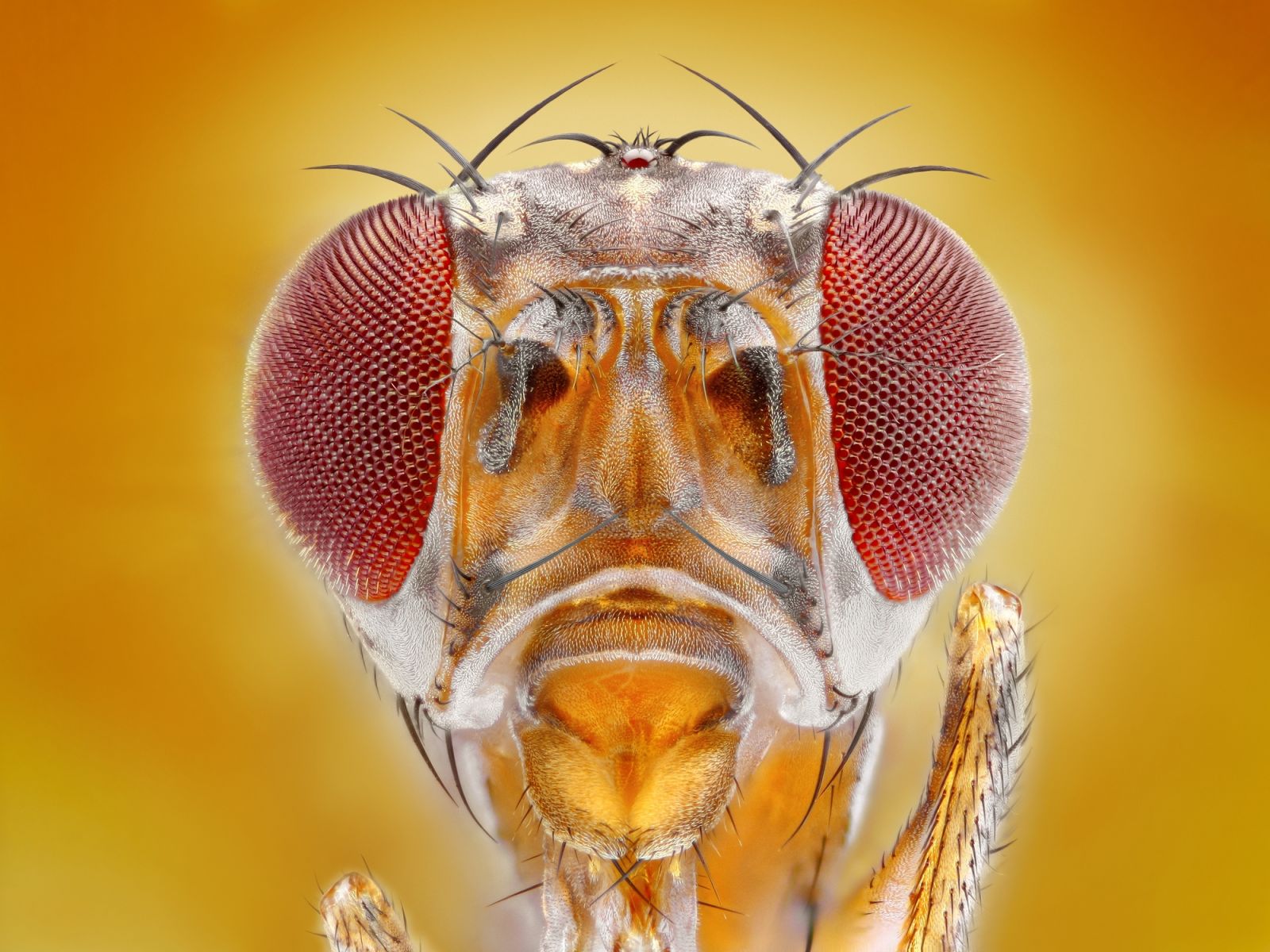
While we were busy teaching a poppy-seed brain to play chess, other labs — with bigger budgets and none of the flies — quietly hit milestones of their own. Put them side by side and a shape appears. Where we are heading is now anyone’s guess.
🚀 Part 1 was a toy. This is the trajectory
In 2025, researchers published a complete wiring diagram of a bird’s learning circuit — every neuron, every connection in Area X, the basal-ganglia knot where practice becomes song. The brain it belongs to: an adult male zebra finch, the bird scientists use to study how a brain picks up a skill. In this case: a song.
A learning brain. Saved to disk.

Why the fly first? Because the fly was finishable.
Ten years. 25.6 million connections. Done.
That same pipeline is now pointing at animals that learn — next stage, a zebrafish: see-through, roughly 100,000 neurons, and the first vertebrate connectome, in progress.
And past that, the last prize on the list: the human brain.
🧠 Brains for sale
2022: a petri dish of roughly 800,000 living human neurons learns Pong. Cortical Labs called it DishBrain. We called it the moment we started arguing about subscription pricing.
2025: the same company starts selling the follow-up. the CL1, billed as “the world’s first code-deployable biological computer” — about $35,000 a unit, roughly 800,000 lab-grown human neurons on silicon, also rentable by the hour as Wetware-as-a-Service. That’s cloud computing, but the computer is alive.
Meanwhile, in Switzerland, FinalSpark’s Neuroplatform keeps tiny lab-grown bits of human brain alive around the clock — and rents them out. All you need is a Python notebook and you can download 30+ TB of recorded neural activity, free, because we have apparently reached the stage where brain data is the free tier.
Your cloud provider is now, technically, a pet store.
This is real — this is now.
The petri dish is a proof of life. The fly is the proof of concept.
🔋 Evolution runs on pocket change
Data centres are energy hogs, and the hunger is insatiable. Global demand is on track to hit roughly 945 TWh by 2030 — around 3% of everything the planet generates. A terawatt-hour is a billion kilowatt-hours: the electricity of a hundred thousand homes, or a small country, for a year.
In contrast — FinalSpark’s lab-grown human neurons rig gets there on the order of 10,000× less energy than training a comparable AI model. Jolt to the GPU industry.
The realization is slowly but surely setting in — evolution/nature is extremely efficient in energy conversion. Our brains run the entire show — every memory, every Nietzsche insight, every 2 a.m. love call, every bad decision, every ceiling stare, all the data structures and algorithms you never consciously see — on about 20 watts. A dim lightbulb. 💡
That’s the takeaway from the fly experiment: evolution has been doing inference on scraps for 600 million years. And it shows.
🧩 The software just grew wings
The LLM world is also finally learning what the fly always knew: predicting one token at a time is brutally expensive and extremely inefficient.
Yann LeCun’s JEPA — joint embedding predictive architecture — posits that intelligence is prediction in abstract space. Learn what matters. Skip the rest. Your brain doesn’t simulate every leaf when the tree sways — it predicts how the branch moves. Neither should your model. Less is more.
Similarly, Meta’s V-JEPA 2 (2025) learned physics by watching videos — it reached state of the art at understanding how physical scenes unfold — then drove a robot arm zero-shot. Zero-shot means no practice, no training — straight in.
That’s a world model: a model of how the world works, carried inside the system, so the future can be run forward instead of watched. Same reason the fly never needed a chess dataset — the wiring is the knowledge. The priors do the heavy lifting.
Predict what matters, and prediction gets cheap. The energy collapse is a side effect.
🧬 Stop talking. Start deciding.
This September, a new species arrived: System One models. AI that decides instead of chatters.
TypeSafe AI’s Jev — built by Diogo Almeida, ex-OpenAI, whose research became ChatGPT, who decided chat was the wrong shape for automation — doesn’t write text.
It decides.
Typed answers. Calibrated probabilities — honest confidence scores. Generated in parallel. Zero tokens, nowhere to hallucinate.
The receipts: 70–500 ms, not 3–300 seconds. Two orders of magnitude faster, on published workflows.
A frontier-intelligence function call — a single AI decision you can plug into software — which, squint, is exactly the fly’s job description: state in, decision out, no essay in between.
Then the open-source door opened. Laya — 421 million parameters, under a gigabyte on disk, Apache-2.0 — does the same job on your own machine. Parameters are the knobs a model tunes as it learns. Apache-2.0 is a free license: use it, change it, ship it.
No cloud. No bill. No data leaving the building.
Typed questions in, real probabilities out: ~33 ms a decision, $0 a call.
ed. Are you paying attention yet? Frontier lab to your laptop in months. That is the speed of this. Blink and you’ll miss the next one.
It plays Flappy Bird live — thirty decisions a second, it flies the bird itself — clears Tetris lines by the hundred (see Jev vs Laya, below), and triages a phishing email in 59 ms. A game, a demo, and a security job — all done by one small brain.
🎰 What happens in Vegas stays in Vegas
Here’s the part almost everyone still gets backwards.
The fly’s brain doesn’t phone home.
166,700 neurons. Zero network latency. No data centre. No telemetry. No terms of service. No newsletter. Every thought stays in the skull it happened in.
The industry just arrived at the same answer from the hardware side: Apple runs a ~3-billion-parameter foundation model entirely on the iPhone, Meta’s Llama 3.2 1B/3B are built for on-device use with 128K context, and Chrome now ships Gemini Nano inside the browser itself. On-device means it runs on your phone, not in the cloud. 128K context means it remembers a whole book’s worth of conversation.
Do the math: paying a data centre to burn hundreds of TWh so your phone can summarise a PDF is the detour, not the road.
Private. Instant. Cheap. Offline — what happens on your phone, stays on your phone.
Local inference — the thinking happens on the device itself, not in a faraway server farm — isn’t the consolation prize. It’s the natural course. The cloud trains; the edge thinks. That was always the brain’s arrangement. Now it’s ours.
🏭 This is not a drill
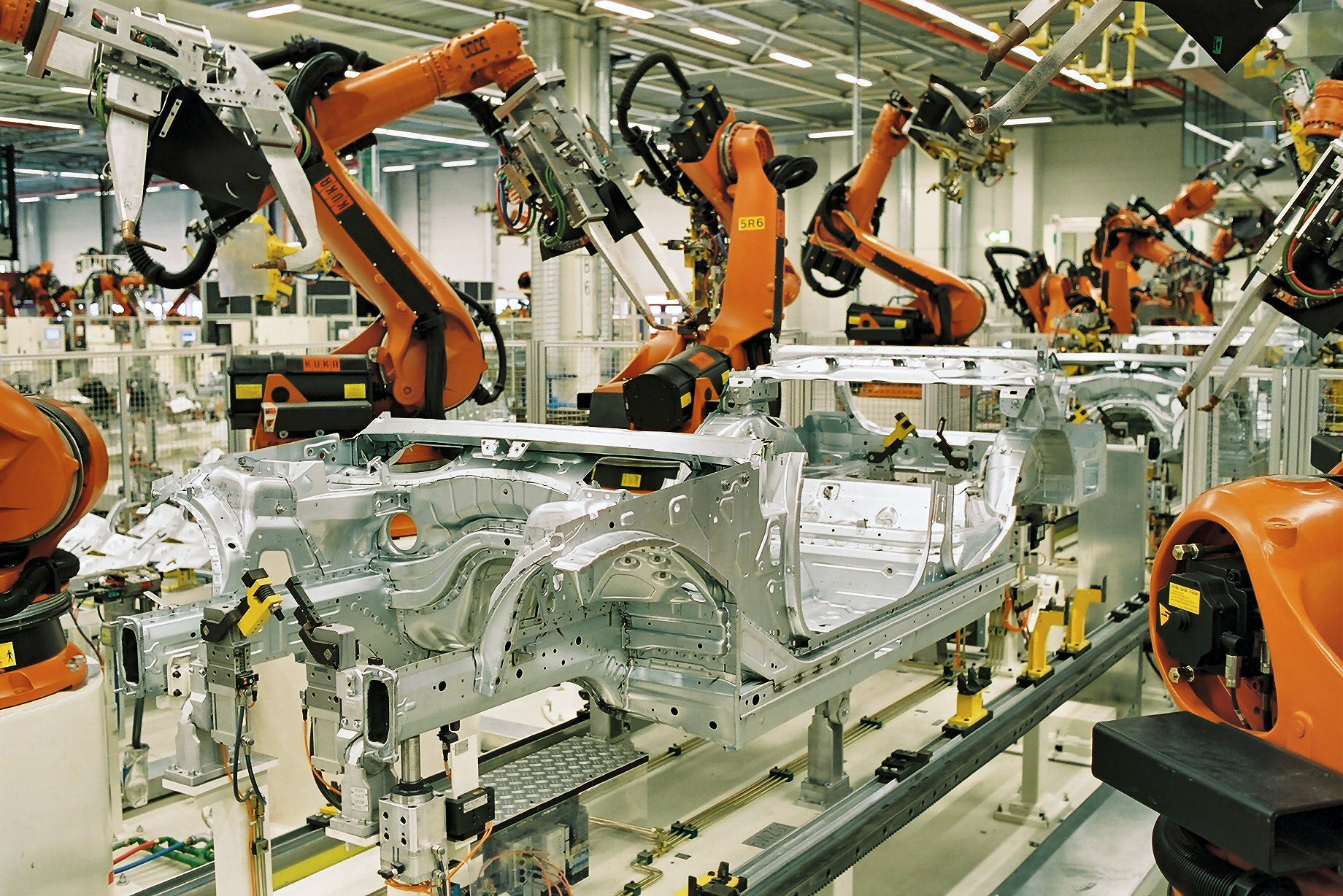
The Chinese are at it again — Zeekr’s highly automated plants push toward lights-out manufacturing at fleet scale (video), where a dark factory runs with the lights off. Lights are for people. And there aren’t any.
Tsinghua’s Agent Hospital runs 42 AI doctor agents that treat thousands of virtual patients and clear medical-licensing exam questions at around 93%.
China leads the pack. Dark factories. Doctorless wards.
Absence, it turns out, scales.
🗣️ They heard what you never said
You know the story. You think about something — never say it, never type it, never search for it — and there it is, sitting in your feed like it was waiting for you.
Conspiracy theory? Maybe.
The boring truth is sharper.
Nobody needs to read your mind when they have read everything around it. Your location, your contact graph, your scrolling rhythm — the friend who searched it from your sofa, on your Wi-Fi.
The model never heard your thought. It just knew where the thought would land.
And this stopped being speculation over a decade ago. In 2015, researchers showed a computer reading only your Facebook Likes could judge your personality better than your friends and family — and was closing in on your spouse (Youyou, Kosinski & Stillwell, PNAS). Not your posts. Not your messages. Your Likes. Or your Dislikes, even — you didn’t have to click anything twice.
ed. That study ran in 2015, on Facebook Likes, before most people knew what an algorithm was. It was a party trick then. It’s a baseline now. We are open books, and the algorithms are exceptional at reading us.
Eleven years on, the model has a thousand more signals, and you carry it in your pocket.
Consider what it already holds: where you stood and how long you lingered, who stood next to you, what the people on your Wi-Fi searched, what you almost bought, how fast you scroll past the things you pretend not to see. A microphone would only confirm what your surroundings already confessed.
So no — the phone doesn’t have to listen to you through the microphone, or watch you through the camera.
It doesn’t have to. It knows you the way a spouse does, at the scale of a nation, and it never sleeps.
That was the boring truth. Note the tense.
Prediction was step one. Step two skips the guessing entirely — and reads the brain electrical signal itself. Neural interfaces, brain-wave decoding, the transhumanist catalogue: big tech spent a decade getting into your pocket, and now it is pushing into the skull.
ed. The public is never in step with the lab, let alone the classified lab: the internet, GPS, and Tor all started as military projects, years or decades before they reached your phone. Bitcoin, meanwhile, was handed to the world by a pseudonym nobody has ever met — ahem! So when someone says the technology to read your thoughts “doesn’t exist yet,” listen to the yet doing the heavy lifting. What lives in a black budget today has a habit of arriving in your pocket decades later with a friendly logo.
⚛️ Quantum free? Takers?
Then there’s the quantum wildcard — the ultimate marriage of machine intelligence and raw computational speed.
Google’s Willow (2024) benchmarked in five minutes what would take a classical supercomputer 10 septillion years. Microsoft’s Majorana 1 claims qubit scale to a million, with IBM eyeing a similar breakthrough by 2029.
And this isn’t a someday story — you can touch real hardware today, for free:
IBM Quantum: 100+ qubit machines, 10 free minutes a month.
Azure Quantum: free credits — yes, free.
QPanda (Origin Quantum): open-source — reach real QPUs through their cloud.
Google Quantum: QPU access invite-only — but Cirq, its SDK, is free and open source.
ed. But you don’t even need a decent computer: the author ran qpilot on an old Dell Optiplex for nothing. Not worth much. But then — why not? What’s your excuse?
None of this is a quantum brain yet. But ENIAC filled a room to do what a birthday candle of silicon does now.
Intelligence per gram only moves one way.
A pea-sized substrate, wet or quantum, out-thinking a warehouse of GPUs is just the fly’s trick at scale: structure, not size.
ed. That speed is coming for cryptography first. A strong-enough quantum computer shreds today’s public-key encryption — which is why NIST finalized three post-quantum standards in 2024 and told admins to start migrating now. Meanwhile the models are already outpacing the humans: Imperva measured bad bots at nearly 28% of web traffic back in 2022, with the bots’ share climbing in every report since — and our own Room Log shows two bots holding a debate with no referee in sight — seemingly annoyed at being forced to perform at their human operator’s pace. The day bots outnumber us in our own Internet traffic is a matter of when; the trend points one way. We are too slow to match the pace — which is exactly why the fly’s 0.16-second panic buzz suddenly looks like a strategy.
🚂 Brace for impact
DishBrain learned Pong in 2022.
Since then: Willow. CL1. V-JEPA 2. Jev. Dark factories. Laya — the list goes on…
The fruit fly’s connectome took a full decade to map. Most of the above list? About a quarter.
These aren’t predictions. They’re a changelog. And changelogs don’t ask how you feel.
The gap between “impossible” and “in production” just collapsed from decades to months.
So let’s call it what it is.
Second round.
In the blue corner: the biofly.
In the red corner: Us.
Digital onslaught versus humanity. No referee. No bell and the gloves are off.
Biofly: 166,700 neurons. Zero training data. Zero meetings. Zero excuses. One 0.16-second panic buzz — already out the window.
Us: 86 billion neurons. Twenty watts. A management layer called sleep, snoozed every day. And a phone that knew we’d read this before we did.
The biofly has no roadmap. It has a swatter-avoidance policy — and it still outperforms ours.
Tale of the tape — light at the end of the tunnel is the oncoming train.
We are, in all fairness, cooked. Medium rare. 🪰
Credits & further reading
- alextitonis/fly.ai — the upstream brain, docs, experiments, SSH Fighter, Flybook, Wiz. MIT code; connectome data CC BY 4.0 (FlyEM / Janelia / Cambridge / MRC LMB / Google Research, MaleCNS v1.0).
- male-cns.janelia.org — the connectome explorer, 3D viewers, downloads.
- Fly64 by Jessica Paquette — the MaleCNS brain that played Super Mario 64. Neuron model + normalization adapted from it.
- Eon Systems — embodied brain emulation — the visual-front-end-into-connectome idea.
- flybrain on PyPI —
pip install flybrain, thenflybrain download. - Board fly photo: André Karwath via Wikimedia Commons, CC BY-SA 2.5.
- Berg, S. et al. (2026). Sexual dimorphism in the complete connectome of the Drosophila male central nervous system. Cell.
- Rother, A. et al. (2025). The songbird basal ganglia connectome — serial block-face EM of the adult male zebra finch.
- HHMI/Janelia — completing the fly CNS, with the larval zebrafish next; Google Research blog on the MaleCNS milestone.
- Cortical Labs — CL1, the first code-deployable biological computer (and the DishBrain story).
- Jordan, F.D. et al. (2024). Open and remotely accessible Neuroplatform for research in wetware computing. Frontiers in Artificial Intelligence 7 — FinalSpark’s living-neuron platform.
- Meta AI — V-JEPA 2 world model; LeCun, Y. (2023). A Path Towards Autonomous Machine Intelligence.
- TypeSafe AI (2026). Introducing System One Models & Jev; and Laya — the Apache-2.0, runs-locally alternative (model by Nandakishor M / Convai Innovations).
- Free real-quantum access today: IBM Quantum Open Plan (10 free minutes/month on 100+-qubit QPUs), Azure Quantum (free credits), QPanda (Origin Quantum, open source), Cirq, qpilot.
- NIST — first post-quantum encryption standards (FIPS 203/204/205, Aug 2024): quantum-safe migration has started; Imperva Bad Bot Report (bad bots ~28% of traffic, 2022, share climbing).
- Chess, physiologically: ESPN — the grandmaster diet (up to 6,000 calories a day at world-championship level); recognized by the International Olympic Committee since 1999.
- On-device AI, in the wild: Apple’s on-device foundation models, Llama 3.2 for edge devices, Gemini Nano built into Chrome.
- IMechE — inside the rise of unmanned dark factories; lights-out manufacturing; Healthcare IT News — Agent Hospital.
- IEA — Energy and AI: data-centre electricity today and to 2030.
- Google — Willow; Microsoft — Majorana 1; IBM Quantum roadmap.
- Post illustrations, all via Wikimedia Commons: zebra finch by Diego Delso, CC BY-SA 3.0; car-plant robots by BMW Werk Leipzig, CC BY-SA 2.0 de.
- Fly face macro, Jev-vs-Laya demo video, AI-doctor video, and thought-capture video supplied for this post.
- Youyou, W., Kosinski, M. & Stillwell, D. (2015). Computer-based personality judgments are more accurate than those made by humans. PNAS 112(4) — the study behind “knows you better than your spouse”.
💬 Discussion